The Art and Geometry of the Goat Mandala Vector SVG 3D Layered 8
Sacred geometry has long served as a bridge between symbolic meaning and mathematical precision. When the ancient form of the mandala converges with the animal archetype of the goat and the technical capabilities of vector SVG rendering, the result is a deeply layered visual artifact: the Goat Mandala Vector SVG 3D Layered 8. This particular configuration, distinguished by the number eight, anchors a rich intersection of digital artistry, spiritual symbolism, and practical design utility. Understanding what this format offers requires looking at its components individually and then appreciating how they coalesce into a cohesive, scalable, and visually arresting piece of digital media.
Symbolism Meets Digital Precision
At the heart of this design lies the goat, a figure steeped in mythological and cultural resonance. Across traditions, the goat represents independence, determination, and the ability to ascend to high peaks both literally and metaphorically. In zodiac symbolism, Capricorn embodies ambition and discipline. By placing the goat within a mandala structure, the artist transforms a single animal silhouette into a repeating, symmetrical pattern that evokes cycles, wholeness, and meditative focus. The Goat Mandala Vector SVG 3D Layered 8 does not simply depict an animal; it elevates the image into a geometric meditation where each horn, hoof, and curve is mirrored and multiplied with algorithmic precision.
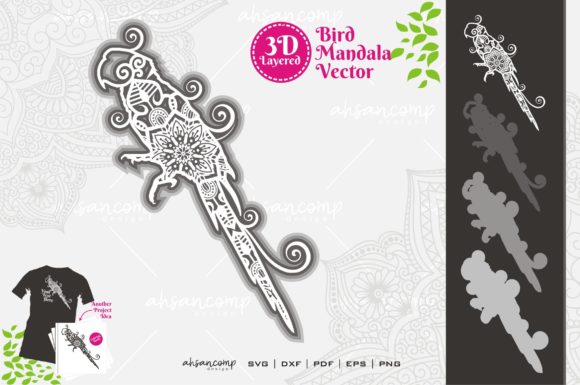
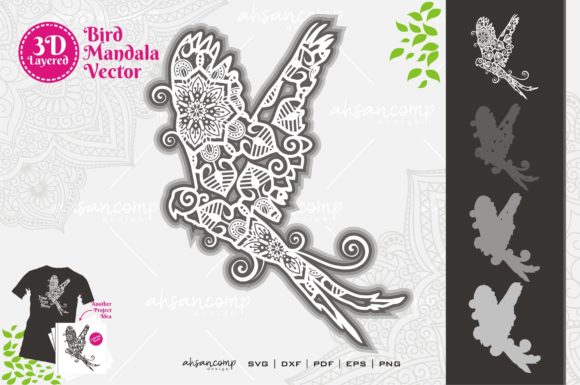
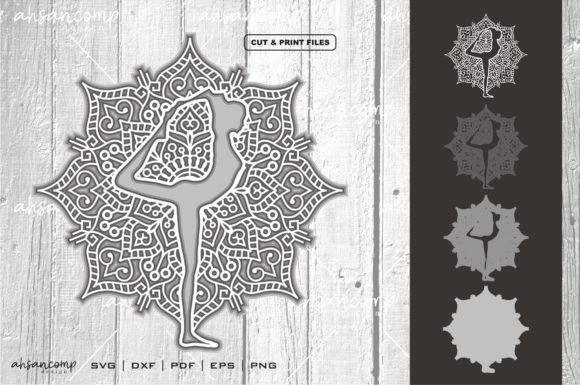
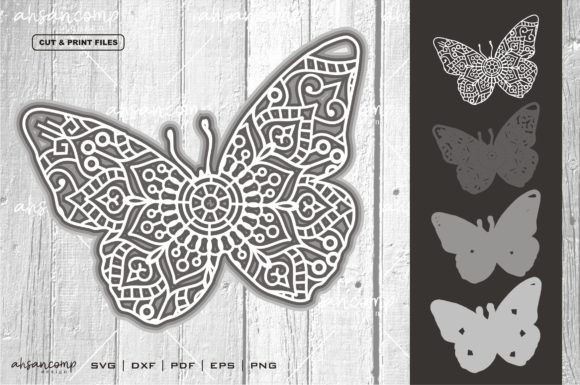
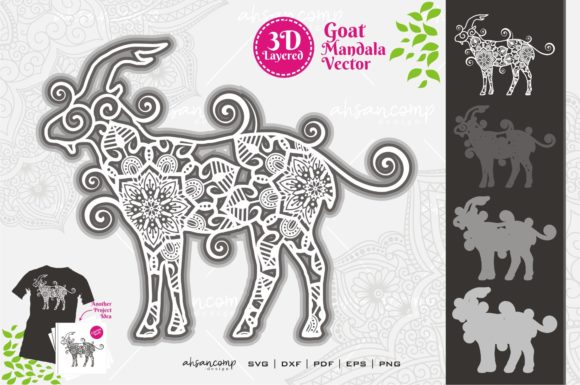
The digital format—SVG (Scalable Vector Graphics)—is what makes this representation both beautifully crisp and infinitely adaptable. Unlike raster images that pixelate when enlarged, vector files preserve every contour of the mandala at any size. This is especially critical when the design is intended for large-format printing, high-resolution displays, or detailed laser engraving. The "3D Layered" descriptor adds further richness: rather than a flat, single-plane illustration, the design uses depth cues such as offset layers, shadow gradients, and overlapping elements to create the illusion of three-dimensionality. In the Goat Mandala Vector SVG 3D Layered 8, these layers are often stacked in concentric rings, with the goat form emerging from or receding into the center, depending on the artist’s intent.
Understanding the 3D Layered Construction
The 3D effect in this type of mandala is not accidental but carefully engineered through vector paths and strategic layering. Typically, a designer will begin with a base mandala ring constructed from repeating geometric shapes—circles, petals, stars, or chevrons. Onto this foundation, additional layers are added, each offset slightly in scale or position to create a sense of depth. The goat silhouette itself is often broken into multiple components: the head, horns, beard, and neck may each reside on separate layers, with subtle drop shadows or gradient fills applied to simulate distance.
What sets the layered approach apart is how the number eight structures the repetitions. Eight-fold symmetry means every element appears eight times around the central axis. This creates a visual rhythm that feels both complete and expansive. In the Goat Mandala Vector SVG 3D Layered 8, the goat's form may be repeated in full eight times, or its features may be distributed across the eight petals of the mandala. The result is a hypnotic balance between the organic curves of the animal and the rigid geometry of the circle. Designers often use software such as Adobe Illustrator, Inkscape, or Affinity Designer to build these files layer by layer, then export them as clean, editable SVG code.
Practical Applications Across Creative Fields
The versatility of the Goat Mandala Vector SVG 3D Layered 8 makes it valuable across a surprisingly wide spectrum of use cases. For graphic designers, it serves as a ready-made focal point for posters, album covers, branding materials, or spiritual-themed publications. The layered depth ensures it works equally well in full-color digital campaigns or monochrome print runs. Many designers appreciate that SVG files allow them to extract individual layers, recolor elements, or remove the goat entirely if only the geometric background is needed.
In the world of physical product creation, the design finds a natural home. Laser cutters and CNC routers thrive on vector files, and the layered depth of this mandala translates beautifully into wood, acrylic, or metal. A craftsman might cut the outermost ring from birch plywood, the middle layer from tinted acrylic, and the innermost goat silhouette from brass. The Goat Mandala Vector SVG 3D Layered 8 becomes a tangible, hanging piece of wall art with real physical depth. Similarly, vinyl cutter users can produce multi-layered decals for laptops, vehicles, or storefront windows, stacking colors to recreate the 3D effect in adhesive form.
Educators and researchers have also taken notice of this design style. Art teachers use the mandala to explain symmetry, radial balance, and the mathematical concept of rotational order. Geometry lessons come alive when students can deconstruct an SVG file, examine its coordinate points, and see how eight-fold symmetry emerges from repeated translations of a single goat contour. For researchers studying visual perception, the 3D layered effect offers a controlled stimulus for experiments on depth perception, figure-ground segmentation, and the aesthetic appeal of symmetrical complexity.
Technical Considerations for SVG Implementation
Working with the Goat Mandala Vector SVG 3D Layered 8 involves some technical nuance, especially for those who plan to modify the file programmatically or embed it on the web. Because the design typically contains many overlapping paths, the file size can grow quickly. Optimizing the SVG by combining redundant paths, removing invisible elements, and using proper grouping (
Another consideration is color management. The 3D appearance often relies on gradients, which are supported in SVG but can behave differently across browsers and rendering engines. Linear and radial gradients should be defined carefully within the SVG itself, with fallback colors for environments where gradient rendering is inconsistent. Designers who intend the Goat Mandala Vector SVG 3D Layered 8 for print should convert gradients to vector hatching or solid color bands if the output method (such as screen printing or laser engraving) cannot reproduce smooth tonal transitions. Understanding these constraints allows creators to preserve the intended visual impact regardless of medium.
Accessibility also matters. Screen readers and assistive technologies can interpret SVG content when proper title, desc, and ARIA attributes are included. For decorative uses, a simple empty alt text might suffice, but if the mandala conveys meaning or serves as a logo, providing a textual description of the goat mandala layered geometry improves inclusivity. Additionally, ensuring that the file does not cause animation-induced seizures or discomfort means avoiding rapid flashing effects in any interactive version of the design.
Customization and Creative Workflows
One of the strongest advantages of the vector format is the ease of customization. Artists and hobbyists can open the Goat Mandala Vector SVG 3D Layered 8 in their preferred vector editor and begin experimenting. Changing the color palette from monochrome to vibrant jewel tones dramatically alters the mood without affecting the underlying geometry. Adjusting the spacing between layers can make the 3D effect more pronounced or more subtle. The goat itself can be stylized further—adding tribal patterns to the horns, incorporating celestial motifs around the head, or merging the silhouette with other elements such as moons, stars, or geometric animals.
For those who generate mandalas procedurally, the 8-fold structure lends itself particularly well to algorithmic creation. A Python script using a library like svgwrite can replicate the base mandala ring eight times at 45-degree intervals, then layer additional rings at varying scales. By parameterizing the number of layers, the rotation offset per layer, and the shape of the goat contour, a designer can produce entire families of related designs from a single codebase. This generative approach is popular among digital artists who sell parametric or customizable SVG bundles on creative marketplaces.
Collaborative workflows also benefit from the layered SVG structure. A team might have one member who specializes in vector paths and another who focuses on color theory. They can work on separate layers of the same Goat Mandala Vector SVG 3D Layered 8 file simultaneously if they use a version control system or a collaborative editor like Figma or Penpot. The layer naming conventions become critical here: "Layer_01_BaseRing," "Layer_02_GoatHead," "Layer_03_MidRing," and so on help maintain clarity as the project evolves.
The Role of the Number 8 in Mandala Design
The choice of eight-fold symmetry is far from arbitrary. In many spiritual and philosophical systems, the number eight symbolizes infinity, balance, and cyclical renewal. A mandala with eight repetitions aligns naturally with the eight directions of the compass, the eight phases of the moon, and the eight limbs of yoga. By embedding the goat within this structure, the Goat Mandala Vector SVG 3D Layered 8 evokes not only the animal’s personal symbolism but also these broader cosmic patterns. The viewer’s eye is drawn inward along eight converging paths, creating a contemplative experience that a six-fold or twelve-fold symmetry might produce differently.
Mathematically, eight-fold symmetry is rich with possibilities. It allows for both rotational symmetry and, in many designs, reflective symmetry across axes offset by 22.5 degrees. This gives the designer more leeway to introduce variation without breaking the overall harmony. In the layered 3D context, the eight repetitions create a visual rhythm that feels stable but not static. Each instance of the goat catches light and shadow differently depending on its position relative to the viewer, and the layered depth magnifies this effect. The result is a mandala that rewards prolonged viewing, revealing new details as the eye follows the repeating forms around the circle.
Art historians note that mandalas with eight-fold symmetry appear in Tibetan Buddhist sand mandalas, Celtic knotwork, and Islamic geometric patterns. The Goat Mandala Vector SVG 3D Layered 8 thus participates in a tradition that spans continents and centuries, even as it leverages contemporary digital tools. For the modern creator, this fusion of old and new offers a way to produce work that feels both timeless and cutting-edge. The goat, as a totemic animal, adds an earthy, grounded counterpoint to the ethereal geometry, reminding viewers that even the most abstract patterns are rooted in the natural world.
When selecting or commissioning such a design, buyers should evaluate the precision of the vector paths, the coherence of the layer structure, and the elegance of the goat silhouette. A poorly traced contour will stand out in the repetition, breaking the mandala’s spell. A well-crafted Goat Mandala Vector SVG 3D Layered 8, by contrast, will hold together as a unified composition whether viewed on a phone screen, a billboard, or a carved wooden plaque. The best examples balance detail with clarity, ensuring that the 3D effect enhances rather than clutters the viewer’s experience.
Ultimately, the appeal of this specific mandala type lies in its ability to serve multiple masters: it is at once a spiritual icon, a decorative asset, a technical challenge, and a teaching tool. Whether you are a graphic designer building a brand identity around Capricorn energy, a woodworker seeking a challenging laser project, or an educator explaining radial symmetry to a classroom, the Goat Mandala Vector SVG 3D Layered 8 offers a robust and beautiful starting point. Its layered complexity invites exploration, while its clean vector foundation ensures that exploration can happen across virtually any medium or scale.