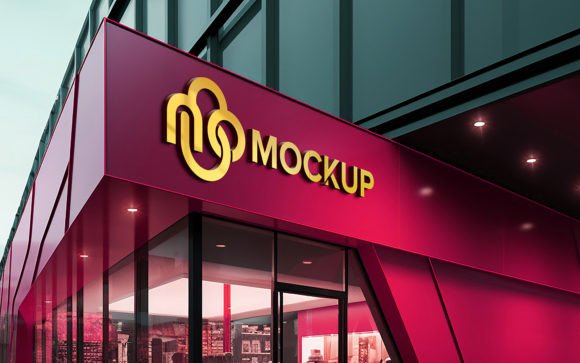
Building Wall Logo Mockup Design for Authentic Brand Presence
Walking through a city, you notice how a logo on a storefront or office wall either grabs you or fades into the background. That moment of recognition or indifference is exactly what Building Wall Logo Mockup Design aims to solve. It’s the practice of placing a brand mark onto a realistic wall surface—brick, concrete, wood, or plaster—to simulate how it would actually appear in the physical world. This isn’t about showing a logo floating in space; it’s about grounding it in a location where people live, work, and move. For anyone who needs to present a brand idea to a client, test a concept for a renovation, or simply visualize how a design holds up outside of a screen, this approach offers a powerful shortcut to reality.
When you think about it, most logo presentations happen in sterile digital environments. You open a file, place the logo on a white background, and hope the client imagines the rest. Building Wall Logo Mockup Design removes that guesswork. It gives you a direct look at how scale, texture, lighting, and surrounding architecture interact with the mark. That shift from abstract to tangible can make all the difference in a pitch or a personal project.
Where This Kind of Mockup Actually Gets Used
Real estate developers are among the most frequent users. When a new apartment complex or commercial plaza is under construction, the developer needs to show investors and tenants what the branding will look like on the actual building. A polished mockup placed on a rendering of the facade helps everyone agree on placement, size, and material before any sign gets manufactured. Without this step, you might end up with a logo that looks great in a PDF but appears comically small or awkwardly placed on a three-story wall.
Another common scenario involves retail chains and restaurants. A franchise owner preparing to open a new location often needs local approvals from landlords or city boards. Presenting a Building Wall Logo Mockup Design alongside the lease application speeds up the process. It shows exactly where the logo will sit, how it interacts with existing signage, and whether it respects local signage regulations. I’ve seen franchisees avoid weeks of back-and-forth simply by having a realistic mockup ready at the first meeting.
Architects and interior designers also lean on these mockups during the concept phase. When designing a lobby, storefront, or even a co-working space, the logo becomes part of the architectural identity. Placing a logo mockup on a wall in the rendering allows the team to evaluate proportions relative to doors, windows, and ceiling heights. It turns the brand into a design element rather than an afterthought.
Event planners and exhibition designers use wall mockups too, though for shorter timelines. A temporary pop-up shop or a trade show booth needs signage that looks intentional and professional. A well-executed Building Wall Logo Mockup Design helps the client approve the visual direction before any materials are printed, saving money and reducing waste.
Different Users, Different Motivations
A graphic designer working with a local coffee shop might use a brick wall mockup to show how a vintage-style logo would look against an exposed wall. The roughness of the brick adds character that a smooth digital background can’t convey. The designer can adjust the logo’s color or texture in response to how it reads from a distance.
A startup founder pitching to investors might use a sleek concrete wall mockup to suggest stability and modernity. Even if the company doesn’t have a physical office yet, the mockup implies a level of readiness and professionalism. It signals that the founder has thought beyond the app or the website and has considered physical touchpoints.
A property manager overseeing a multi-tenant building might use a series of wall mockups to show prospective tenants how their individual branding would fit within the building’s overall aesthetic. This approach helps maintain a cohesive look while still allowing each business to express its identity. It’s a practical tool for negotiations and lease agreements.
Freelancers and small agency owners often use Building Wall Logo Mockup Design as a portfolio piece. Showing a logo on a realistic wall immediately communicates that the designer understands real-world application. It suggests experience and attention to detail, which helps win more clients.
Practical Examples You Might Recognize
Imagine a yoga studio owner who wants a calming, natural look for the front entrance. You place the logo on a textured wooden wall, and suddenly the whole vibe clicks. The warmth of the wood supports the brand’s message, and the client can see exactly how big the sign should be. One less revision later, and the project moves forward.
Consider a tech company moving into a renovated warehouse. The logo needs to feel industrial yet polished. A metal or exposed brick mockup shows how a backlit sign or a painted logo would interact with the raw environment. The team can decide whether to go with a matte finish or a gloss without ordering a single prototype.
Think about a local brewery testing a logo for their taproom. A chalkboard-style wall mockup gives that handcrafted, neighborhood feel. The brewer can experiment with placement above the bar versus near the entrance, all within a few minutes of adjusting the mockup.
Even non-profits and community centers use wall mockups to plan donor recognition walls or entrance signage. A realistic mockup helps the board visualize the final result and approve funding. It turns an abstract idea into something people can rally behind.
What to Consider Before You Start
Not every wall mockup is created equal. The quality of the background image matters a lot. A poorly lit or low-resolution photo of a wall can make the best logo look cheap. Look for high-resolution textures with natural lighting that matches the mood you want to create. Many mockup resources offer adjustable lighting and shadow layers, which give you more control over the final look.
Scale is another factor that people often underestimate. A logo that occupies twenty percent of a digital canvas might take up only two percent of an actual wall. It helps to measure real-world dimensions or use a mockup that includes a sense of proportion, like a door frame or window, to anchor the viewer’s perception.
Material considerations also come into play. A logo meant for a smooth painted wall will behave differently on rough brick or corrugated metal. Some mockups allow you to simulate how paint or vinyl adheres to various surfaces. This is especially useful when presenting to clients who want a specific finish or texture.
Color accuracy is another point to check. Screens display colors differently, and a wall mockup can exaggerate or mute certain hues depending on the lighting in the source photo. If color precision is critical, use a mockup that offers color calibration or pair it with a physical sample card during the presentation.
Strengths and Realistic Limitations
The biggest strength of Building Wall Logo Mockup Design is the ability to communicate a vision instantly. Clients often struggle to translate a flat logo into a three-dimensional environment. A mockup bridges that gap and builds confidence in the design direction. It also reduces the number of revisions because both parties are looking at the same realistic scenario.
Another strength is flexibility. You can test multiple wall types, angles, and lighting conditions without any physical cost. That means you can experiment with options that would be expensive or impossible to produce as prototypes. For a small business owner, this is a cost-effective way to make decisions.
On the other hand, a mockup is still a simulation. No matter how realistic, it cannot fully replicate how the logo will look under every weather condition or at every time of day. Direct sunlight, rain, and wear over time are factors that a static image cannot show. Physical mock-ups or material samples remain important for final validation.
There is also the risk of over-relying on mockups. If the background image is too stylized or dramatic, it can misrepresent how the logo will appear in a more ordinary setting. Choosing a neutral or representative wall texture usually works better than something that looks like a stock photo from a film set.
Finally, not every client or stakeholder will have the same visual literacy. Some people see a mockup and assume it’s a finished photograph of the actual installation. Clear communication about what the mockup represents and what it doesn’t can prevent misunderstandings later.
Making the Most of Your Mockup
Pair the mockup with a brief explanation of materials, dimensions, and installation method. That turns the visual into a practical document that can guide production. If you are presenting to a contractor or sign maker, include notes about the wall surface and any structural considerations.
Keep a library of wall textures that represent common environments your clients work with. Brick, concrete, wood paneling, drywall, and tile are good starting points. Having these ready lets you respond quickly when a client asks, “Can you show me what it looks like on a darker wall?”
Use the mockup as a conversation starter rather than a final answer. Ask the client what they notice about the placement or the contrast. Their feedback often reveals preferences they didn’t articulate earlier. That makes the mockup a tool for collaboration, not just presentation.
For those who design their own brand, playing with a wall mockup can also be a form of self-discovery. You might realize that your logo works better as a vertical element rather than horizontal, or that a lighter background actually makes your mark pop more. These insights are hard to get from a standard digital preview.
Building Wall Logo Mockup Design is ultimately about connection. It connects your digital work to a physical space, your idea to a client’s imagination, and your brand to the people who encounter it in their everyday lives. When you place that logo on a wall and it feels right, you know you have something worth building.